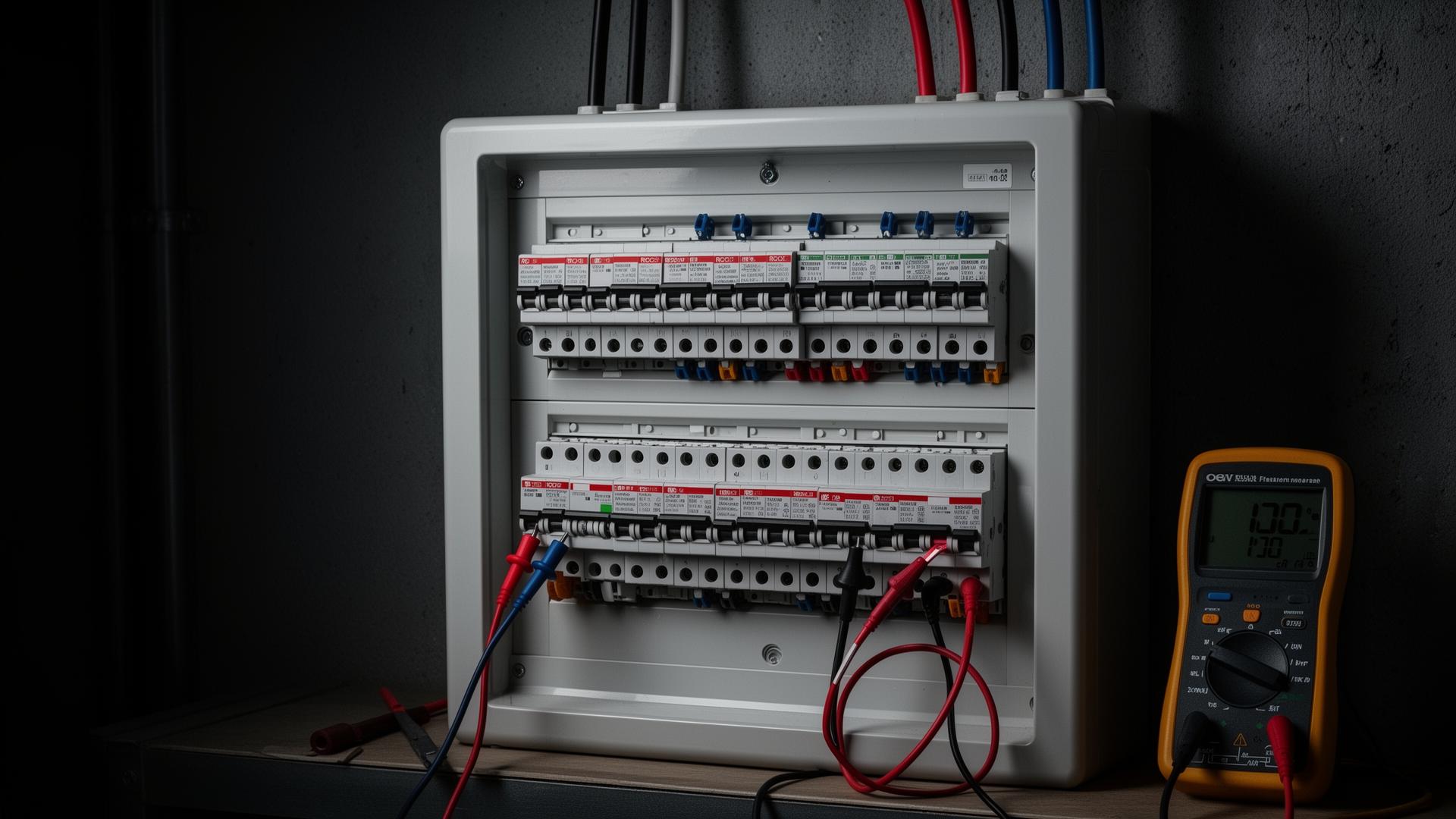
Open commercial consumer unit with breakers and test instrument for an EICR inspection
South Wales

Electrical InstallationCondition Reports(EICR) for Landlords

A clear EICR with photographs, plain-English coding and a fixed-price remedial quote on the same email, so you know exactly what is required, what is recommended and what it will cost to put right.

Trusted by landlords, developers & letting agents across South Wales.
15+
Years on the tools
BS 5839
Certified to standard
24–48h
Typical callout window
100%
Insured & DBS-checked
Service overview

EICR, explained without the jargon

What it is

Periodic inspection and testing of a fixed electrical installation under BS 7671, producing a formal report (EICR) with C1, C2, C3 and FI codes against any defects found.

Who it's for

Private landlords (statutory 5-year EICR), HMO landlords, commercial occupiers, businesses changing tenancy, and building owners after major refurbishment.

When it's needed

Every 5 years for rented domestic property; every 3–5 years for commercial; on change of tenancy if defects are suspected; after any electrical work that affects the consumer unit or main earthing.

Why professional matters

Faults in fixed wiring are silent, failing connections heat up behind plasterboard for months. EICR finds them before the loft does.

The cost of ignoring it

What an unreported electrical fault actually does

Risks if left unchecked

  • Loose connections that arc inside back-boxes, a leading ignition source in older properties.
  • Missing or inadequate earthing that puts every metal appliance at fault-voltage during a fault.
  • Borrowed neutrals from previous rewires that trip RCDs at random or fail to trip when they should.
  • Consumer units without RCD protection on circuits that BS 7671 now requires.

Common mistakes

  • Treating an EICR as a tick-box exercise and accepting a 'satisfactory' with no detail.
  • Allowing remedial work to be quoted by the inspector with no fixed scope.
  • Skipping the inspection because 'nothing has changed', degradation is invisible.
  • Accepting C3 codes as a free pass when several together indicate systemic decline.

A non-satisfactory EICR must be remedied promptly to keep the installation safe and the property compliant with rented-sector electrical safety rules.

Our process

A clear path from enquiry to certificate

  1. Step 1

    Pre-visit info

    We confirm consumer unit access, isolation arrangements and any tenanted units before attending, no wasted visits.

  2. Step 2

    Visual inspection

    Consumer unit, accessories, exposed cabling, earthing and bonding visually inspected and photographed.

  3. Step 3

    Dead testing

    Continuity of protective conductors, insulation resistance, polarity and earth fault loop impedance tested with calibrated instruments.

  4. Step 4

    Live testing & RCD

    Earth fault loop impedance and RCD trip times measured live, with circuits restored to service immediately.

  5. Step 5

    Report & remedial quote

    EICR issued digitally within 48 hours, with photos of every coded item and a fixed-price remedial quote in the same email.

Why clients stay with us

Specific, measurable benefits

Plain-English coding

We explain every C1, C2, C3 and FI in landlord-friendly language, no jargon-shielding.

Same-engineer remedials

The engineer who found it can usually fix it, fewer trips, faster compliance.

Photographs of every defect

You see what we see. So does your insurer if anything is ever queried.

Fixed-price remedial quote

On the same email as the report, no chasing, no day-rate exposure.

Portfolio scheduling

5-year retest dates diaried for every property, we remind you 90 days before.

Tenant-friendly

Most domestic EICRs completed in a single 3–4 hour visit with a 60-second total isolation.

Technical detail

Everything that goes into a proper eicr

EICR is the most important piece of paperwork a landlord holds, and the most commonly fudged. The notes below outline how a competent EICR is actually carried out under BS 7671:2018+A2:2022.

Coding, C1, C2, C3, FI

C1: danger present, immediate action required. C2: potentially dangerous, requires urgent remedy. C3: improvement recommended (does not affect satisfactory). FI: further investigation required without delay. A report is unsatisfactory if it contains any C1, C2 or FI codes.

What 'satisfactory' really means

An unsatisfactory result is not a failure of the inspector, it is a record of the installation's condition. The duty-holder must then remediate. Suspicion of 'soft-coded' reports is one of the main reasons we offer a free second-opinion review of any EICR that looks too clean.

Consumer units and RCD protection

BS 7671:2018+A2:2022 requires RCD protection on all final circuits in domestic premises. Pre-2008 dual-pole MCB boards almost always pick up at least a C3, and frequently a C2 where lighting circuits feed bathrooms.

Earthing and bonding

Main protective bonding to incoming water and gas services is checked and measured. Missing bonding in older Welsh terraced properties is a recurring finding, and a C2 if left.

HMO EICR specifics

Higher inspection frequency (5 years maximum but often 3 years on advice), kitchen and bathroom circuits scrutinised, every socket sampled where occupancy allows. Tenant inconvenience minimised by zoning the inspection over a morning.

Commercial EICR specifics

Three-phase distribution, sub-mains, motor circuits and industrial connections tested with appropriate isolation; out-of-hours visits available to avoid trading disruption.

Frequently asked

Frequently asked questions

Every 5 years for rented domestic property under English regulations (and Welsh proposals), or sooner on change of tenancy. Commercial is risk-based, typically 3–5 years.
Related services

Often paired with eicr

Ready to make eicr one less thing to worry about?

Free survey, fixed-price quote within 48 hours, and certified work delivered when we said we would.

Covering South Wales